Clone your voice in ninety seconds
Ten guided lines, one reusable profile you can version and roll back. Your voice as an asset you own.

A natural voice model is worthless if getting your voice into it is a chore. Most tools either want a studio session and thirty minutes of clean tape, or they take a ten-second snippet and give you a thin, brittle clone that only holds up on short lines. Vocast aims for the middle: enough audio to be faithful, little enough that you record it once and move on.
Ninety seconds, chosen on purpose
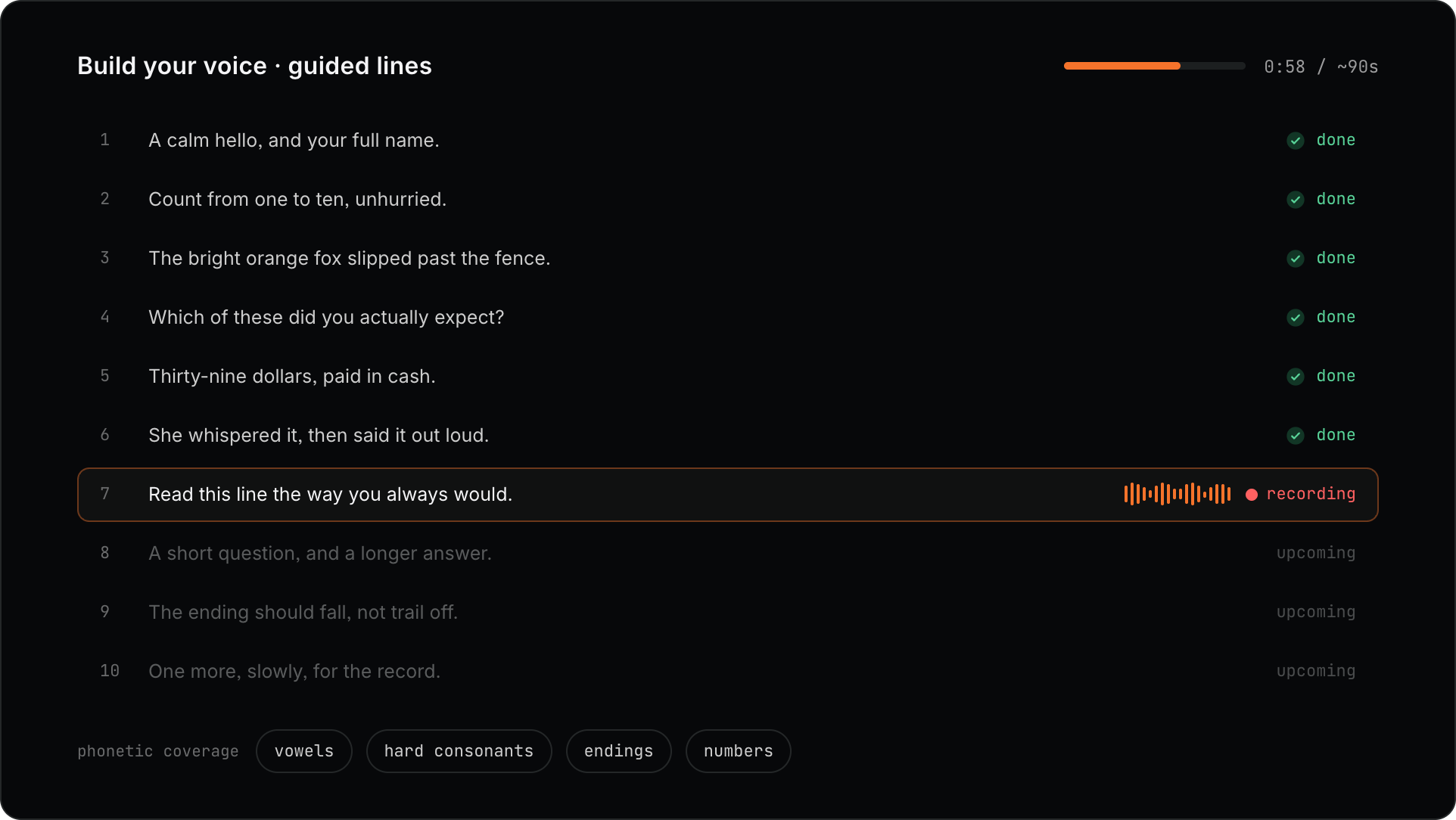
A profile is built from ten short guided lines, about ninety seconds in total. The lines are not random. They are picked to cover the sounds that trip cloning up: a wide pitch range, hard consonants, trailing sentence endings, numbers, and the vowels that carry most of a voice’s identity. Coverage is why ninety focused seconds beats five unstructured minutes.
You read them in the app with the prompt on screen, and the build runs on your machine. When it finishes you get a similarity number, not a shrug. Our profiles land between 0.917 and 0.945 against the source. For context, two separate recordings of the same real person score about 0.909 against each other, so a finished profile sits inside the range of your own voice on two different days.
A profile you own
From then on the profile is a reusable asset, not a one-off upload you hope worked. You can:
- Narrate against it as often as you like, with no re-recording.
- Reinforce it with more source clips when you want it even closer.
- Version it, so each rebuild is tracked rather than overwriting the last.
- Roll back if a new version drifts, returning to the take you trusted.
And when a specific passage needs a specific delivery, you can read it yourself once and let the clone follow your pacing and emphasis. Your voice stops being a snapshot and becomes something you build on over time.